An AI readiness assessment is a structured check of your company before investing in AI: are your goals clear, your processes documented, your data organised, your systems connectable, your team prepared and your controls written down? The result is not a single score but a ranked list of gaps to close, and the use case to start with now.
This guide, written for company leaders in Saudi Arabia, explains what an AI readiness assessment measures and when you need one, how it is run, how to turn its results into a plan, and who should run it: your own team, a technology vendor or a consulting firm.
What is an AI readiness assessment?
AI readiness is a company's ability to benefit from AI solutions and run them safely and sustainably, not its ability to buy tools. An assessment measures that ability across six areas and finds the weakest one, the area that will decide the fate of any project before it starts.
At SELA we run this assessment at the start of every engagement in SELA's AI and process automation services, because it is the first part of diagnosis in our method: diagnose, design the model and plan, execute, then follow up and improve.
A readiness assessment is often confused with two nearby pieces of work. An AI strategy for companies decides where the business invests and in what order, and a technical solution study compares tools for one case. The assessment comes before both, and asks a simpler question: is the ground ready to build on?
| Work | Question it answers | What it delivers | When it comes |
|---|---|---|---|
| AI readiness assessment | Can we run AI solutions now, and what are we missing? | A readiness level per area, ranked gaps and a proposed first use case | First, or at the start of the strategy |
| AI strategy | Where do we invest, and in what order? | Priorities, a roadmap and controls | Once you know where you stand |
| Technical solution study | Which tool or vendor fits this use case? | Compared options, scope and a cost estimate | Once the use case is chosen |
So the assessment doesn't have to be a long project. What matters is that it is honest: that it describes what actually happens in your company, not what the documents say or what leadership hopes.
It usually involves a senior sponsor with decision rights, the process owners in scope, the people who do the work every day, and whoever runs the systems and data. Each sees part of the picture, and leaving one out produces a result that is hard to build on.
When does your company need an AI readiness assessment?
You need one when an investment decision is close, or when AI use has already started and nobody knows whether the company is ready for it. These are common signs:
- A vendor proposal before you know where to start: an all-in-one platform or a chatbot on offer, and nobody knows whether your data and processes can support it.
- A previous pilot that stalled: a tool that was bought and then abandoned, without anyone knowing why.
- A general instruction from leadership: "use AI" without saying what should improve or who leads the work.
- Scattered data: customer or operational information spread across spreadsheets, messages and systems that don't connect.
- Individual use without controls: employees using public tools at work with no policy on what may be entered.
If two or more of these apply, an assessment is usually the cheapest step you can take. It finds the obstacle before you pay to discover it inside the project, after the subscription is paid and the team is committed.
An assessment doesn't mean postponing everything until you are fully ready. No company is ready for everything at once. The right question isn't "are we ready for AI?" but "which use case are we ready for now, and what do we prepare for the next one?"
That question matters even more in wider digital transformation programmes, where the assessment stops you building AI on foundations that will change within months.
Note too that an assessment is not a tool inventory. Readiness is measured by whether people, processes and data can work with a new solution, not by how many tools you already pay for.
What does an AI readiness assessment measure? The six areas
A good assessment looks at the whole company, not just the technology. Most projects that stall don't stall because of the tool. They stall because of an unclear process, unreliable data, a team that wasn't involved, or nobody owning the decision.
The area that produces the most surprises is processes. The documented process often differs from what the team does every day, and AI speeds up what it finds, not what was written down. We cover how to prepare the process itself in our guide to the readiness ladder for business automation.
Data comes next. The question isn't "do we have data?" but whether the data that flows through the first use case is complete and consistently formatted, and who can access it. If it includes personal data about customers or employees, it falls under Saudi Arabia's Personal Data Protection Law, whatever tool you use.
For goals and leadership, look for a business problem with a metric and an owner, not general enthusiasm. For systems, ask whether each one offers secure access to its data or whether data is moved by hand. People readiness shows in whether the team knows what will change, and whether someone reviews the solution's output.
Governance is measured by what is written and actually applied: the usage policy, who approves tools, and when human review is mandatory. It helps to compare yours with the principles and regulations published by the Saudi Data and AI Authority (SDAIA).
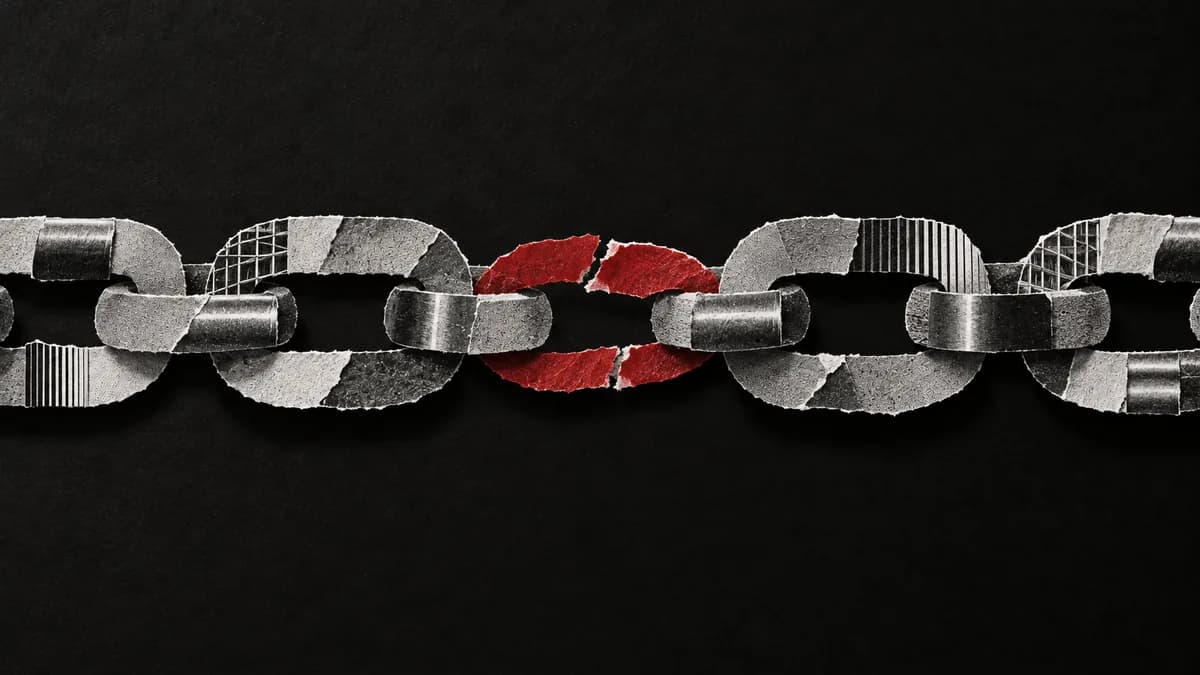
The rule is simple: AI readiness for a given use case equals the readiness of the weakest area that case depends on. Excellent data doesn't make up for a solution with no owner, and an enthusiastic team doesn't make up for a confused process.
How is an AI readiness assessment carried out?
The assessment follows six steps, and the most important principle is to collect evidence from reality, not from surveys alone. A survey measures what people believe about their company; interviews and reviews of systems and data measure what actually happens.
- 1Set the scopeThe departments in scope, the candidate use cases, and the senior sponsor.
- 2Collect the documentsWritten procedures, the list of systems, policies, and the tools in use today.
- 3Interview the people who do the workProcess owners, the people who run the process daily, and those who manage systems and data.
- 4Check a sample of the dataCompleteness, format, source and who can access it.
- 5Rate each area with evidenceA readiness level for each area, with the evidence behind it.
- 6Rank the gaps and propose a startGaps ranked by impact, and a first use case that fits current readiness.
You don't need precise numbers for each area. More important than the rating is the evidence written beside it: why did we rate data as partly ready? Because, for example, customer data is split between the sales system and branch spreadsheets. That evidence is what turns the result into action.
Three levels per area are usually enough:
| Area | Not ready | Partly ready | Ready |
|---|---|---|---|
| Goals and leadership | A general wish, no defined problem | A defined problem with no sponsor or metric | A problem, a metric and a sponsor who decides |
| Processes | Unwritten and different across teams | Written, but practice differs | Documented and applied as written |
| Data | Scattered across sheets and messages | In a system but incomplete or inconsistent | One source, consistent format, clear owner |
| Systems | Don't connect | Connected by manual or partial transfers | Allow secure integration with their data |
| People | Not consulted, unaware of what will change | Know the goal but untrained | Involved in the design and clear on their role |
| Governance | No policy, no owner | A written policy that isn't applied | A policy, an owner and defined human review |
The value of diagnosis before any decision shows in our full organisational diagnosis for a plastics manufacturer that set its development priorities. The diagnosis found a broken decision-making mechanism between the three partners, with no regular meetings and nothing documented, and its findings were then translated into three targeted interventions.
The same principle applies to an AI readiness assessment: what the diagnosis reveals about decisions and ownership often matters more than what it reveals about the technology.
What should you do with the results?
An assessment that ends in a report filed in a drawer hasn't done its job. Its result should answer three practical questions: what do we start now, what do we prepare before the next use case, and what do we postpone?
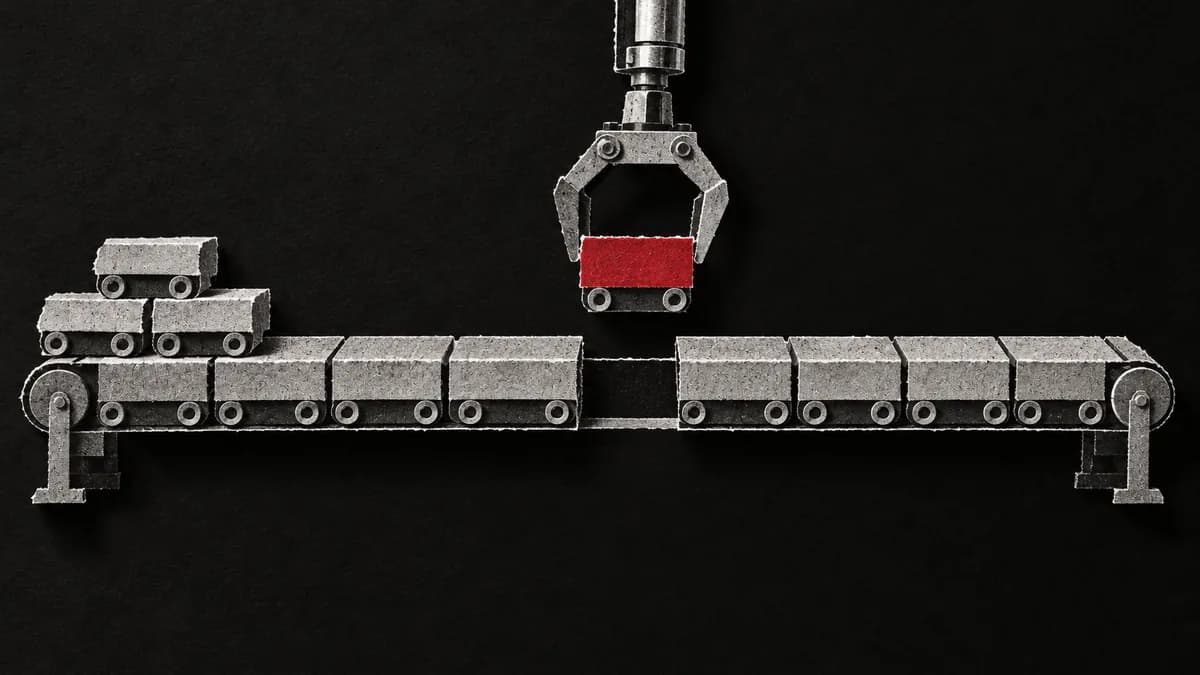
Results usually point each use case down one of three paths:
- Start now: a use case where every area it depends on is ready, such as an internal assistant that searches company policies and documents.
- Prepare, then start: a high-value case held back by one area, such as a customer chatbot waiting for order data to be unified.
- Postpone: a case that needs more than one area prepared, so it goes into the roadmap rather than this quarter's plan.
Make sure what you receive is enough to make that decision: a readiness level per area with its evidence, gaps ranked by impact, an owner and first step for each gap, and a proposed first use case with its scope and success metric. Without these, the result is a description, not a plan.
Closing a gap is part of the project, not an obstacle in front of it. Documenting a process or organising the data for one use case is limited work that can be estimated, and we explain how preparation enters the budget in our guide to the cost of process automation and what drives it.
Don't neglect people when you plan. Change management starts with the assessment itself: people who took part in the interviews and saw the findings accept the solution more readily than those surprised by it. Share a summary with the teams involved, and explain what will change in their work and why.
Then repeat the assessment after the first pilot. The first use case reveals things about your data and systems that no review on paper can, and it updates your AI readiness map before you choose the next case.
Who should run your AI readiness assessment?
You have three options: your own team, the technology vendor you are considering, or a consulting firm that runs the assessment and links it to what comes next. Each has its place, depending on your company's maturity and the time available to lead the work.
| Option | Fits when | What to watch for |
|---|---|---|
| Internal team | Processes are documented, the team understands both the business and the systems, and time is set aside | It is hard to assess what you are used to, and people may avoid naming their own department's weaknesses |
| Technology vendor | After you have chosen the use case, to assess technical readiness for their solution | It usually measures your readiness for its product, not the company's readiness as a whole |
| Consulting firm that links assessment to delivery | You want all six areas assessed, and one party that stays through the first pilot | Choose a firm that interviews the people doing the work and checks the data, not one that stops at a survey |
If you use an outside firm, ask four things:
- How evidence is collected: interviews and checks of data and systems, or a survey only?
- Coverage: does the assessment include processes, people and governance, or technology alone?
- Deliverables: ranked gaps and a proposed first use case, or a general score and a slide deck?
- What comes after: who helps you close the gaps, then run and measure the first pilot?
If the gaps will touch structure, authority and processes, not just AI, you may need management consulting that leads change from diagnosis to delivery. Readiness gaps are often organisational at their root.
Be wary of an assessment that starts with the solution, such as being asked to measure "your readiness for a particular platform" before you have agreed on the problem. An AI readiness assessment answers a question about your company, not about a product.
Agree on deliverables up front, not on the number of interviews or pages, and ask to see a sample result first. A firm that can show you its readiness map and gap list usually knows what it is looking for.
Frequently asked questions
How long does an AI readiness assessment take?
It depends on how many departments are in scope, how well processes are documented, how easily systems and data can be reviewed, and how available the people you need to interview are. Keep the scope to two or three departments and a few candidate use cases rather than the whole company, then extend it with each phase.
What's the difference between an AI readiness assessment and an AI strategy?
A readiness assessment describes where the company stands: what is ready in its processes, data, systems, people and governance, and what is missing. An AI strategy decides where to invest and in what order. The assessment comes first, or at the start of the strategy, because priorities that ignore readiness usually end in stalled projects.
Does a mid-sized company need a readiness assessment?
Yes, sized to fit. A mid-sized company doesn't need a long assessment. It needs a focused review of the six areas around one or two candidate use cases: is the process documented, is the data good enough, who owns the solution, and what controls apply. That is enough to avoid buying a tool it can't run.
What if the assessment shows we're not ready?
That is a useful result, not a failure. The assessment doesn't judge the whole company; it shows which use case you are ready for now and what is missing for the others. There is usually a simple case you can start with, while the bigger gaps are closed in stages, such as documenting one process.
Is an online survey enough to measure readiness?
A survey is useful for collecting impressions quickly, but it measures what employees believe about their company, not what actually happens. Complement it with interviews with the people who do the work, a review of processes and systems, and a check on a sample of the data. That evidence is what turns the result into a plan.
Next step: know where you stand before you buy
An AI readiness assessment isn't about a score to hang on the wall; it is about a decision: what to start, what to prepare and what to postpone. Set the scope, collect evidence from reality, rate the six areas, then start with the use case your current readiness allows.
If you want to know where your company stands, talk to SELA about an AI readiness assessment for your company and we'll help you set the scope and choose the first use case that fits your stage.